

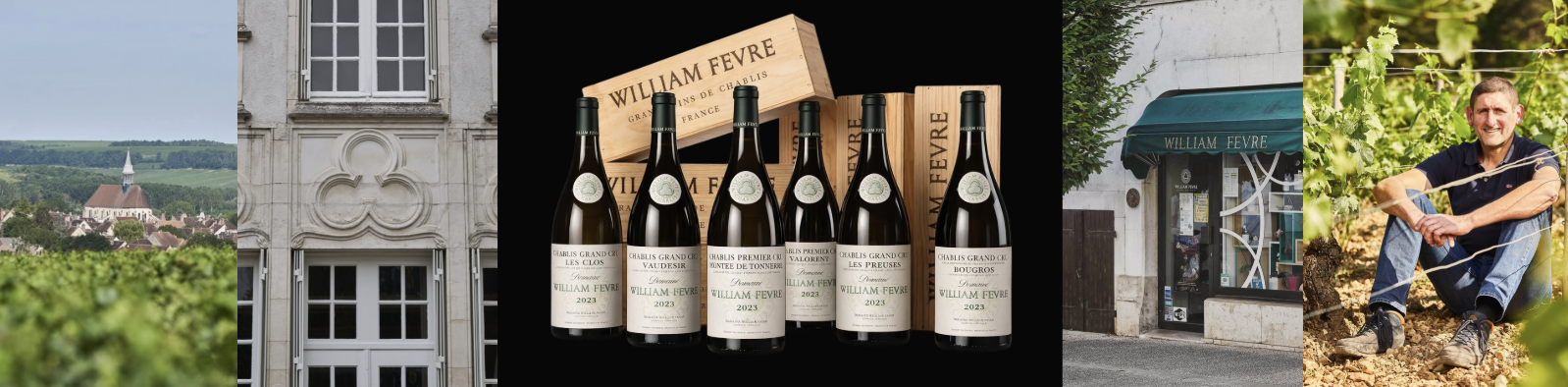
The Spectacular 2023 William Fevre’s
1er Cru & Grand Cru Chablis
The 2023 vintage has just landed in Australia - we’re opening 12 wines from one of Chablis’ most respected estates. 7 Premier Cru and 5 Grand Cru side by side.
“William Fèvre can take much credit for putting Chablis on the fine-wine map… and makes top-end Chablis worthy of any cellar.”
- Lay & Wheeler
“Grapefruit to nectarine and green apple, laden with pungent, salty mineral notes… truly a wine for the ages.”
- Charles Curtis MW on William Fèvre 2023 Les Clos (Vinum Fine Wines)
————
Sunday, March 22nd
Hosted by Ray Jordan
Lunch: 12-3pm | 12 Wines and 4 Courses | $255.00
Masterclass: 4pm-6pm | 18 Wines and Kate Lamont Canapés | $165.00
Vinum Fine Wines, on Fevre’s 2023 Chablis
Combining quality, pedigree and value in a manner that is matched by few, the Region of Chablis remains the perfect hunting ground for savvy fine wine buyers.
The 2023s from the excellent William Fevre have just been released to much acclaim and are superb buys. The Grand Crus from Fevre are always spectacular, these 2023s are no exception to the rule.
For Charles Curtis MW, Les Clos is “among the great wines of Chablis” and this 2023, “truly a wine for the ages”. The Valmur is excellent, while the Bougros Cote Bougros is “Chiselled and fine but still impressively powerful.”
-
Chablis was declared a region in 1938. It sits around 16 kilometers east of Auxerre. Currently, the region is a little under 7,000 hectares with around 80 percent planted. It is the most northerly district of Burgundy (sharing the Chardonnay grape), although it also has an affinity with neighboring Champagne. Its location tends to provide a focus on acidity, with the wines having a flinty, steely note and often less influence from oak than the rest of Burgundy.
Before we get to the Grand and Premier Cru wines, most Chablis sees no oak, just stainless steel tanks. It is the soil that is absolutely key here: Kimmeridgian clay with chalk (the same chalk found in the White Cliffs of Dover) and fossilized oyster shells (a character that often appears in tasting notes – the oyster shell bit, not the fossilized).
Chablis’ history inevitably involves monks. The Pontigny Abbey was established in 1114 and the Cistercian monks planted grapes, believed to be Chardonnay. It was from here that Chardonnay spread throughout the Burgundy region. Chablis became part of the Duchy of Burgundy in the fifteenth century.
It would not be all roses. The establishment of the French railway system allowed more distant, and cheaper, regions to ship wine to the cities. Phylloxera hit in 1887 and caused major issues. Toss in a couple of wars and by the 1950s the area planted, once over 6,000 hectares, was down to less than 500. Some severe frosts in the 1950s and harsh vintages did not help. Frosts in 1956 and 1957 were so bad that the latter year had a total production of just 11 cases for the entire region. Yes, that is 11 cases in total from all the producers. Still, that exceeded the production in 1945, 1951, and 1953.
A slow path back. As mentioned, the region received AOC certification in 1938, which mandated that the grape to be used here was Chardonnay and established the boundaries and winemaking practices. It was also important to protect the name Chablis, which was being bastardized around the world. Here in Australia, the name was thrown at an array of wines, none from the region of course, and the vast majority without a drop of Chardonnay.
An ever-growing appreciation for the glories of Chardonnay, enhanced winemaking methods, and better frost protection all have contributed to the revival of the region and plantings are now not that far short of what they were at peak, around 5,800 hectares. For wine lovers, this is a region that should be on every bucket list. It is a beautiful part of France and, at least when I have been there, wonderfully devoid of tourists.
One issue, largely resolved these days though quite contentious in years gone by, was the use of oak. Most Chablis sees only stainless steel tanks but when we move to the Premier and Grand Cru wines, things change. In the past, large old vats that effectively imparted no oak character or influence at all were popular.
These days, it is much more likely that the wines will be treated as they are in so many other regions and see French oak barrels, new and seasoned. All that said, the region still keeps the brakes on the use of oak to a greater degree than many regions to ensure that any appearance of oak in the wines is minimal.
Chablis has the four appellations. At the bottom of the pyramid is Petit Chablis. The next step up the ladder is Chablis, which is the largest appellation here. Premier Cru is the second highest, with some 40 different Crus. Among the star Premier Crus are Mont de Milieu, Montée de Tonnerre, Forêts, Butteaux, Vaillons, and Fourchaume.
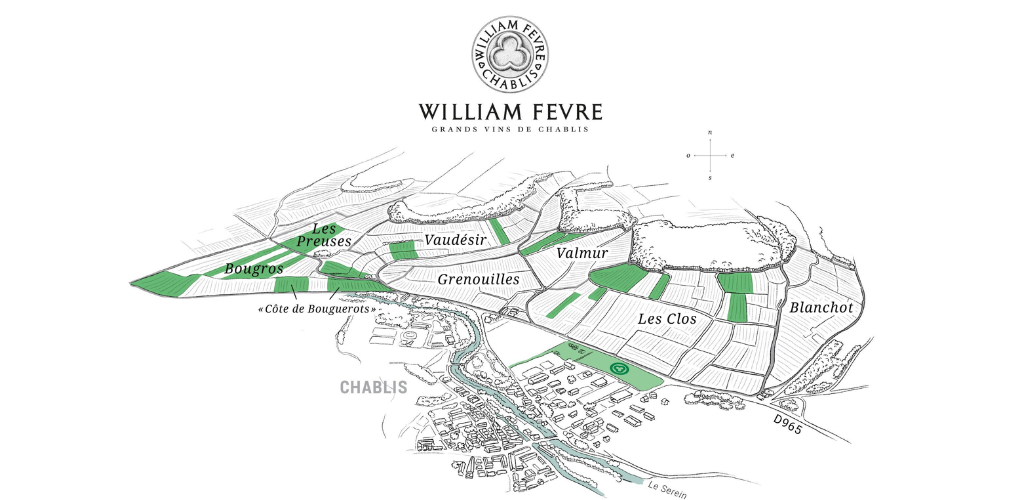
Finally, the pinnacle, the seven Grand Crus, all found on a hillside opposite the town of Chablis. They are Blanchot, Bougros, Les Clos, Grenouilles, Preuses, Valmur, and Vaudésir. They are on southwest-facing slopes, which catch the most sun. A few of the Premier Cru vineyards also share this aspect, while the rest are southeast facing. The total area of the Grand Crus is around 100 hectares. Elevation is between 150 and 200 meters.
In very gentle terms, Blanchot is seen as the most ethereal and elegant; Bougros is thought of as the most muted but it can blossom; Grenouilles is considered the most aromatic and also usually one of the more elegant Crus; Les Preuses, which enjoys the most sun exposure, is richer and fuller; Valmur is balanced, seductive, and aromatic; Vaudésir is Chablis at its spicy and intense best; and finally, the best of the best, Les Clos, which can offer that trademark Chablis minerality and complexity as well as longevity.
I mentioned Raveneau. This producer has for many years been the leading light in the region. The wines are extremely distinctive, with a richness, intensity, complexity, and texture unequalled. It is simply one of the great wines of the world – never miss the opportunity to enjoy one.
It is fair to suggest that a few years ago, no one was making the same claims for William Fèvre.
-
Domaine William Fèvre works passionately to express Chablis’ terroirs, respecting the region’s environment and traditional practices. The team works throughout the year with exacting levels of care and precision to achieve excellence and reveal the true characteristics of each climat. As well as maintaining the deep-rooted values upon which the family has always insisted, the domain has managed to instill its vineyards and its wines with great vitality, thanks to modern technology and a resolute avant-garde vision. Style is an empty shell. Wine’s potential lies in its sensual response. For Chablis, this is derived from its terroir, which creates freshness and minerality.
(The Real Review)-
Domaine William Fèvre is one of the most prestigious of all Chablis houses and, despite its relative youth, produces some of the finest expressions of Chardonnay from the north of Burgundy. The domaine holdings cover a wide range of vineyards, including numerous grand and premier cru Chablis sites.
The Fèvre family has been in Chablis for 250 years, but the domaine itself wasn't established by William Fèvre until 1959. William Fèvre himself sold the eponymous business in 1998 to Maisons et Domaines Henriot (which includes Champagne house Henriot, Beaune-based Bouchard Père et Fils and Beaux Frères).
Today, Domaine William Fèvre owns around 76 hectares (190 acres) in Chablis, 15 hectares (37 acres) of which are in grand cru vineyards including Les Clos, Vaudésir, Bougros and Preuses.
This variety of plots gives a complete and full profile of wines – for example, those from Bougros are typically full-bodied and rounded, while those from Vaudésir are more lively, fresh, and floral. A further 16 hectares (39 acres) of vineyards are classified as premier cru (these include Fourchaume/Vaulorent, Vaillons, Montmains, Montée de Tonnerre and Les Lys).
Historically, the wines were all aged in new oak, although more recently William Fère has changed to the use of barrels that are, on average, five years old, allowing for the quintessential Chablis freshness and minerality to shine through. Harvesting is all done by hand, with rigorous sorting for the premier and grand cru parcels.
Fèvre has used Diam agglomerated cork closures since 2005 to counter the issue of premature oxidation which has long been a problem in Burgundy's white wines.
Alongside the wines from village, premier cru, and grand cru plots in Chablis, Fèvre also makes a wine from the highly unusual Saint-Bris appellation, the only Sauvignon Blanc-based AOC in Burgundy.
-
2023 Chablis Vintage Report - Decanter | Charles Curtis MW (December 9, 2024)
The 2023 Chablis vintage produced delicious, forward wines in quantity; we present the vintage report by Charles Curtis MW.
The warm, dry winter preceding the 2023 in Chablis heightened fears of frost damage among growers, but outside some minor episodes of frost on 28 March and 4 April, the spring passed without incident.
Flowering in early June occurred under ideal conditions, and a very large crop was set on the vines. June through August saw scattered rain and cooler temperature, but ripening accelerated with a September heatwave that caused alcohol to jump and acidity to drop.
The 2023 Chablis report devotes in-depth coverage to everything from Petit Chablis to village-level premier cru and grand cru Chablis wines. For the first time we also include coverage of the very best from the larger region of the Grand Auxerrois, including the crus of Irancy (for Pinot Noir), Saint-Bris (for Sauvignon Blanc), and Vézélay (for Chardonnay) as well as some outliers from the Bourgogne Côtes d’Auxerre appellation, northern reaches of Burgundy that can be particularly successful in recent warmer vintages.
Curtis tasted over 400 of the region’s top wines, from superstar growers such as Raveneau and Dauvissat to emerging stars such as Pattes Loup and Guillaume Michaut at Domaine 47°N 3°E. He presents his top 100 wines across the myriad styles of Chablis and the Grand Auxerrois, with an emphasis on the very best in quality and value.
The full report illuminates the ready-to-drink charm of the Petit Chablis and village Chablis appellations, where yield was generous and prices may remain moderate. Curtis also makes a deep dive into the differences between the premier crus on the Left Bank of the Serein and those on the Right, and looks in depth at the very top wines of the grand cru slope and its seven terroirs.
The year was not without pitfalls – producers who did not control yield risked dilution, and those who did not judge the harvest date well sometimes produced wines high in alcohol and low in acidity, faults this report will help the reader avoid. However, the top growers produced intense, ageworthy wines well worth purchasing en primeur to ensure supply.
The Wine List & Menu
2023 William Fèvre Premier Cru Beauroy
The Fèvre bottling of premier cru Beauroy is teeming with wonderful aromas of lime peel and green apple, touched with a bit of smoky reduction and a lovely salty edge on the finish. The texture is lively and fresh, but there is also density here. The grapes come from three parcels located in part of the Beauroy climat called Troésmes. There are two parcels of old vines (up to 50 years of age) and one of young vines. The grapes are fermented and aged partly in tank and partly in cask (40–50%).
94 Points, Charles Curtis MW, Decanter
2023 William Fèvre Premier Cru Montmains
In the hands of Fèvre winemaker Didier Séguier, premier cru Montmains has a certain initial reserve. But with time, the green apple and gooseberry notes, touched with acacia blossoms and spice, open up on the palate. The texture is lively and fresh, yet there is substance here as well. The grapes are assembled from 10 parcels throughout Montmains, including some in Forêts and Butteaux. Séguier explains that Butteaux is deep in the valley and further from the Serein so it ripens later. The grapes are fermented in tank and older casks for 40–50% of the harvest.
95 Points, Charles Curtis MW, Decanter
Jamon, grissini
2023 William Fèvre Premier Cru Vaillons
The 2023 Chablis “Vaillons” from Domaine William Fèvre is another absolutely classic expression of this fine premier cru vineyard. The bouquet is bright and complex, wafting from the glass in a lovely mix of lemon, pink grapefruit, anise, citrus peel, chalky minerality, white flowers and a gentle topnote of beeswax. On the palate the wine is vibrant, full-bodied and focused, with a great core of fruit, lovely bounce and grip, seamless balance and a long, mineral-driven and complex finish. First class Vaillons!
93 Points, John Gilman
2023 William Fèvre Premier Cru Les Lys
Sourced from a north-facing site beneath forest cover with clay-rich soils, a parcel selection in Vaillons, the 2023 Chablis 1er Cru Les Lys is among the most quintessentially Chablisien wines in the portfolio and is harvested around a week later than the fruit that enters the Vaillons bottling. It offers aromas of oyster juice, white flowers, lemon oil and Granny Smith apple, followed by a medium- to full-bodied, incisive and pure palate that is elegant yet racy and fresh, concluding with a long, saline finish.
93 Points, Kristaps Karklins, The Wine Advocate
Abrolhos scallops, sambal butter, lemon
2023 William Fèvre Premier Cru Fourchaume
The 2023 Chablis 1er Cru Fourchaume, sourced from a 3.6-hectare, clay-rich, south-facing parcel at the bottom of the slope in Vaulorent, opens with aromas of orange peel, white flowers and oyster shell. Medium- to full-bodied, the palate is fleshy yet lively, underpinned by bright acidity and concludes with a long, saline finish. This cuvée is not produced every year.
92 Points, Kristaps Karklins, The Wine Advocate
2023 William Fèvre Premier Cru Montée de Tonnerre
This powerful, thrilling wine shows pronounced, ripe aromas of mirabelle plum, nectarine and green apple, with a strong underpinning of flinty minerality and smoky reduction. The texture is tightly wound and compact; it's substantial, but not heavy, carrying the wine to a marvellously long finish. The grapes are from 2.24ha in the lieux-dits Pied d'Aloup, Côte de Bréchain (planted 1936), and Chapelot, fermented in a combination of tank and cask, ageing now on the lees prior to bottling. Ideally wait five years before opening and drink over the next 30.
94 Points, Charles Curtis MW, Decanter
2023 William Fèvre Premier Cru Vaulorent
The Vaulorent from Fèvre is more mineral than its Montée de Tonnerre, if a bit less lush, with aromas of lime peel, mirabelle plum, and passion fruit. The texture is chiselled and concentrated, with layers of tightly wound extract and a dense, chalky finish. The grapes are from 3.6ha in Vaulorent, which is part of Fourchaume but located on the side of the grands crus. Winemaker Didier Séguier chooses his favourite blocks for this bottling and crafts a 'classic' Fourchaume from the rest. Fermentation is done in older casks for 40-50% of the grapes.
95 Points, Charles Curtis MW, Decanter
Roasted prawns, salsa verde
2023 William Fèvre Grand Cru Valmur
Didier Séguier has crafted an absolutely brilliant example of Valmur in 2023. The wine delivers superb complexity in its nose of pear, green apple, fresh lime, a beautiful base of chalky soil tones, raw almond, citrus blossoms and a touch of beeswax in the upper register. On the palate the wine is deep, full-bodied, complex and impeccably balanced, with a gorgeous core of succulent fruit, a great girdle of acidity, superb mineral drive and grip and a long, vibrant and very precise finish. 2033-2070.
95 Points, John Gilman
2023 William Fèvre Grand Cru Vaudésir
Picked on the first day of harvest, these three parcels sit on the sunny side. Moreover, they sit on steep slopes, allowing excellent sun exposure. Yet they also sit right in the Kimmeridgian clays, so they produce a wine that shows classic Chablis restraint. Scents of peach fuzz, lemon blossom, fleur de sel, sea shells and brie create a whirlwind of complexity. Didier loves how well this wine ages, so don't be impatient.
95 Points, Tim Atkin MW
2023 William Fèvre Grand Cru Les Preuses
Sourced from an east-facing slope that yields one of the racier and more ethereal wines in the range, the 2023 Chablis Grand Cru Les Preuses opens with aromas of oyster liquor, orange peel, white flowers and lemon oil. Medium- to full-bodied, taut and tensile, it is nakedly chalky, incisive and searingly saline. The site is so steep that special cable equipment is employed for its cultivation.
95 Points, Kristaps Karklins, The Wine Advocate
2023 William Fèvre Grand Cru Bougros "Cote de Bouguerots"
Initially a bit restrained, the fruit opens up on the palate with notes of white peach, nectarine and Mirabelle plums, accented with a salty minerality and a hint of spice. Chiselled and fine but still impressively powerful. Fèvre owns more than a third of Bougros; 2ha are located in this unique parcel that rises steeply from the river in south-southwest-facing slopes, producing this exotic, concentrated wine that will live for decades.
95 Points, Charles Curtis MW, Decanter
2023 William Fèvre Grand Cru Les Clos
Year after year, Fèvre's Les Clos is among the great wines of Chablis. In 2023, the pronounced aromas range from grapefruit to nectarine and green apple, laden with pungent, salty mineral notes and a little smoky reduction – a bit of everything, really. The texture is dense, almost impenetrable at this age, but enlivened by a lovely hint of bitterness at the end. It is truly a wine for the ages. Ideally wait a decade before opening; this wine will last at least 40 years.
96 Points, Charles Curtis MW, Decanter
Warm chevre, sourdough crumb, leafy greens
Espresso, jam shortbreads