

A Sunday dedicated to Chablis.
“…one of the world’s great white wines.”
Ken Gargett
Join us as we explore 13 wines from Petit Chablis to Premier Cru, exploring purity, terroir and outstanding value… across three events at Lamont’s Cottesloe:
The Lunch, Masterclass and/or Dinner.
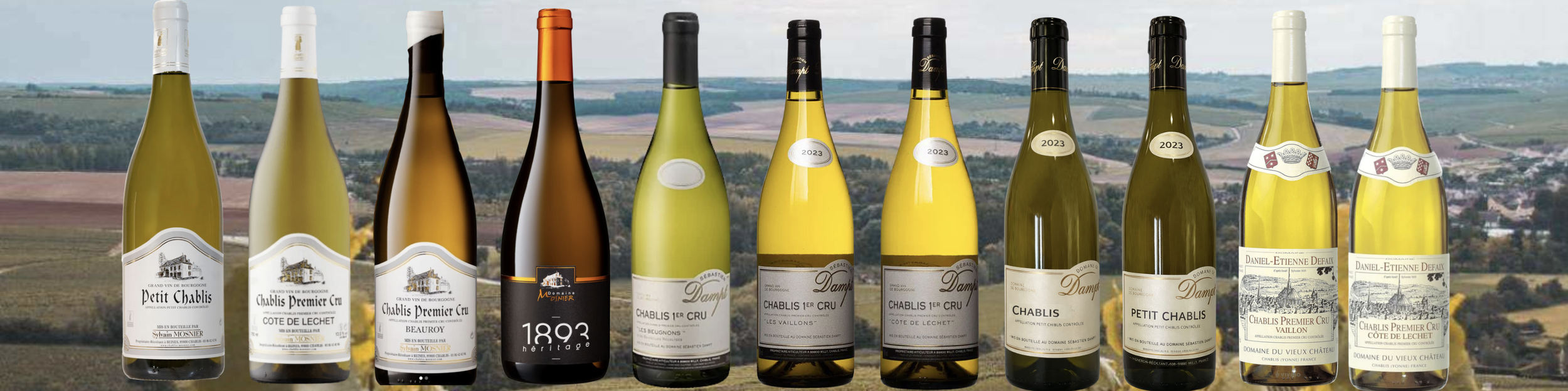
13 Chablis | 3 Domaines | 8 Premier Crus
A lineup of Petit Chablis, village Chablis and a deep dive into Premier Cru sites including Côte de Léchet, Vaillons and Beauroy.
The Domaines:
Sylvain Mosnier | Sébastien Dampt | Daniel-Etienne Defaix
… Over Five Vintages: 2023, 2022, 2021, 2011, 2010
“…2010 is also a year Decanter declared ‘a triumphant vintage in Chablis,’ awarding it five out of five stars!”
WineAccess.com
“Sébastien Dampt is a rising star of Chablis…”
Berry Bros. & Rudd, bbr.com
“Chablis is one of the world’s great white wines.”
Ken Gargett
————
Sunday, January 4th
Burgundy Series #1
Lunch: 12-3pm | 13 Chablis and 4 Courses | $195.00
Masterclass: 4-6pm | 13 Chablis and Kate Lamont Canapés | $95.00
Dinner: 6.30pm |13 Chablis and 4 Courses | $195.00
A Critic’s Perspective: Ken Gargett on Chablis
Excerpts from Quill and Pad ‘s article‘Chablis: A Top-Class Cru White Wine That Doesn’t Get The Love It Deserves’, by Ken Gargett, 2021 (quillandpad.com)
Technically, Chablis is considered the most northern part of Burgundy for whites, but in fact, it is much closer to Champagne than it is to Burgundy. Both regions use Chardonnay. Centered around the town of Auxerre in the department of Yonne, the appellation was created back in 1938 with vineyards along the lovely Serein River. It really should be a must-visit for any wine lover.
Vines have been grown here since Roman times, but cultivation took off in the twelfth century with the Cistercian monks from Pontigny Abbey. It has long been internationally popular. Even Leo Tolstoy makes mention of it in his novel Anna Karenina, noting that “classic Chablis” was a commonplace choice of wine.
The key to Chablis is the Kimmeridgian limestone/clay that forms the substrata for the region. Laid down back in the Jurassic era, some 150 to 180 million years ago (depending on your source, but after all, what is 30 million years between friends), it consists of innumerable minute fossilized oyster shells – this was a time when Burgundy was under the sea. The total area of Chablis is 6,834 hectares, of which 4,820 are under vines.
The wines are ranked slightly differently to most regions. There are four levels, which form a sort of pyramid.
At the base, Petit Chablis (this appellation was not designated until 1944).
Above it Chablis, which accounts for the majority of all Chablis produced.
Then we move to the Premier Cru Chablis with some 40 climats, though less than half of those offer wines upon which most focus. Premier Cru Chablis totals around 15 percent of production from 779 hectares. Good examples will age well for at least five to ten years. The best Premier Cru vineyards are those on the right bank surrounding the vineyards designated as Grand Cru.
Which brings us to the peak of the pyramid, the Grand Crus. These wines form just one percent of Chablis’s production – or three percent, depending on your source – from 101 hectares. It consists of just seven climats – Blanchot, Bougros, Les Clos, Grenouilles, Preuses, Valmur, and Vaudésir. These wines can easily enjoy a couple of decades in the cellar. As well as the region’s typical flintiness and minerality, they exhibit a level of richness rarely seen in other wines from the region – or anywhere else.
Some of the most highly regarded Premier Crus are Fourchaume, Les Fourneaux, Montée de Tonnerre, Mont de Milieu, Butteaux, Vaillons, Vaucoupin, and Montmains.
Plenty of others stick with oak. William Fèvre, Laroche, Raveneau, and Dauvissat are examples here. Most of the lesser styles see only stainless steel. It is with Premier Cru and Grand Cru Chablis that we most often see the use of oak.
The wines of Chablis vary throughout the different levels of the pyramid and also from maker to maker and different vintages.
Chablis is always a fine food wine. Seafood is an obvious option, especially oysters and other shellfish. The Grand Cru wines are known to work very well with a range of dishes from foie gras to snails and andouillette, though lobster is always a classic.
No matter where Chablis sits in your perception, it should not be ignored or treated with the contempt of familiarity. Chablis is one of the world’s great white wines.
-
Recent Chablis vintages
A superb vintage is 2010, one that will age – and is aging – brilliantly. But if you are drinking these wines from your cellar then you need little assistance from me. You know your stuff. Concentrated, high acidity. Great year. It followed on from the wonderful 2008 vintage.
The 2011 is softer and probably worth drinking now.
Another classic vintage is 2012, though it may not have got its deserved accolades, squeezed in between 2010 and 2014. Concentration and balance here.
Two thousand thirteen was broader, a little underwhelming and definitely one to drink, not keep.
As mentioned, 2014 was a star. Powerful, yet pure. Wines for the long haul. This was a year where the characters of each climat shone through. In other words, if you want to see the terroir of Chablis, get on board, if you can find any. Put simply, a classic.
Another that probably didn’t receive the respect it deserves is 2015. More approachable than ’14 but good concentration and pure fruit.
Hail caused some issues in 2016, though the wines are now exhibiting a greater level of quality than originally anticipated. That said, when winemakers start throwing around terms like “challenging” and “overcoming incidents,” don’t get carried away. There will be better options.
In the pantheon of great years, 2017 holds a special place. In the last few years, if you are a Chablis fan and you didn’t fill your boots with this great year, may I politely ask why the hell not?
A classic year and one with great concentration, purity, and balance. They will age superbly. Low yields, and this is the problem – overall, a small vintage. The word “exceptional” is thrown around a bit much, but here it seems completely warranted.
In 2018 it was another fine, indeed generous, year but perhaps a smidge pedestrian when compared with its predecessor, though the good wines offer richness. It always seems a bit harsh to condemn a year because another exceeded it, but that is the way of the world.
What has been interesting, perhaps condemning, is that many feel that this is a year in which the wines are more Chardonnay than Chablis. This should not put you off buying them as the best are very fine.
It is too early for me to be offering a personal view on 2019, but the reports suggest enviable concentration. They seem to be a step up on the 2018s and should have a significantly longer life.
The 2020 vintage is even younger, of course, and it is impossible to be definitive, but the reports are not discouraging. An early vintage, and one that looks like it might be, as they say, classic.
The Domaines in Context
-
About Silvan Mosnier:
Sylvain Mosnier (pronounced ‘Monnier’), a motor mechanic, has produced Chablis since 1978 when his wife inherited her Chablis based family’s vineyards. He made quality wines but it was not until his daughter Stephanie came home from both winemaking college and from a period gaining experience in other well-known wineries that the quality really took a jump into the realm of the serious, unwooded, lower-to-midrange priced best values in all of Chablis.
The winery has been cleverly and strategically designed with rectangular tanks stacked on top of each other, acting as walls as high 8-15 metres, rather than the space consuming circular tanks that we are used to in this country. Every square meter of the comparatively tiny central area is used to its greatest effect. Very practical, very clever. The tasting cellar, though, is very old and underground in the old village of Beines, 6kms (or 8 minutes) to the west of Chablis.
JJ -
Critics Comments:
A clear superstar of the future, his wines are some of the purest, most ethereal expressions of Chablis – mostly vinified in stainless steel to safeguard the fruit’s nuanced expression of his terroirs.
John Armit, the UK
Sébastien Dampt is a rising star of Chablis and a new producer to the BBR fold.
BBR, UKAbout Sebastien Dampt:
Jean Defaix is one of the better known and longer standing Chablis producers and his only daughter married Daniel Dampt. Daniel began his own Domaine in Jean’s cellars and as the years passed, Jean’s grandsons, Daniel’s sons (who had both worked in either Australia or New Zealand for experience) also established their own brands from their inherited vineyards and these two, Vincent and Sebastien Dampt, organised to build a large new modern cement structure for a winery on the hills above the village of Milly. All four brands are now made in this winery with the grandsons now making and supplying the wines to maintain their legacy of the Domaine Jean Defaix wines, for which there is still significant demand around the world.The Dampts have built a large, very modern tasting room up a seriously wide staircase above some of the cellars and operational areas that has wall to wall windows on three sides looking into the hills, the distance and out over the village and into the Grand Cru slopes, in that order. The wines of Sebastien have been well reviewed for a least a decade by Allen Meadows of Burghound who says they are very good examples of the unoaked school, and great value for money at their, and these, prices.
John Jens -
Whenever we see one of Daniel-Etienne Defaix’s Chablis on a wine list, we order it without fail. His business model is completely nuts, but he wouldn’t have it any other way. He’s the last of a dying breed.
Defaix refers to himself as “Le Dernier des Mohicans” or the “Last of the Mohicans,” a reference to his status as virtually the sole remaining member of the Chablis old guard who still holds back vintages for a number of years before releasing.
Nobody else is crazy enough to age their top Premier Cru Chablis in a steel tank for over a decade before bottling it, but once you taste his 2010 Côte de Lechet Premier Cru, you’ll see exactly why he does it.
Defaix is giving you the chance to experience the incredible golden color, the interplay of citrus fruit and mineral nuance that only aged Chablis is capable of—for about HALF the price of a bottle of 2022 village Puligny. We love this wine’s floral, crushed oyster shell, sliced button mushroom scents, and aged, leesy character. It’s so rich and minerally.
Most other village-level wineries in the region are putting 2022s on the shelves; the 2010 is Defaix’s current—yes, CURRENT—release. 2010 is also a year Decanter declared “a triumphant vintage in Chablis,” awarding it five out of five stars!
“These are textural, complex wines that evoke the white Burgundies of yesteryear,” Robert Parker once wrote of Defaix’s releases, telling readers to buy on sight because “much of the production is sold to France’s best restaurants.”
(WineAccess.com)More About Domaine Daniel-Etienne Defaix
Daniel-Etienne Defaix owns one of the most ancient estate in Chablis (height centuries for the Vieux Château). Since 4 centuries, Defaix family are winemakers from father to son.
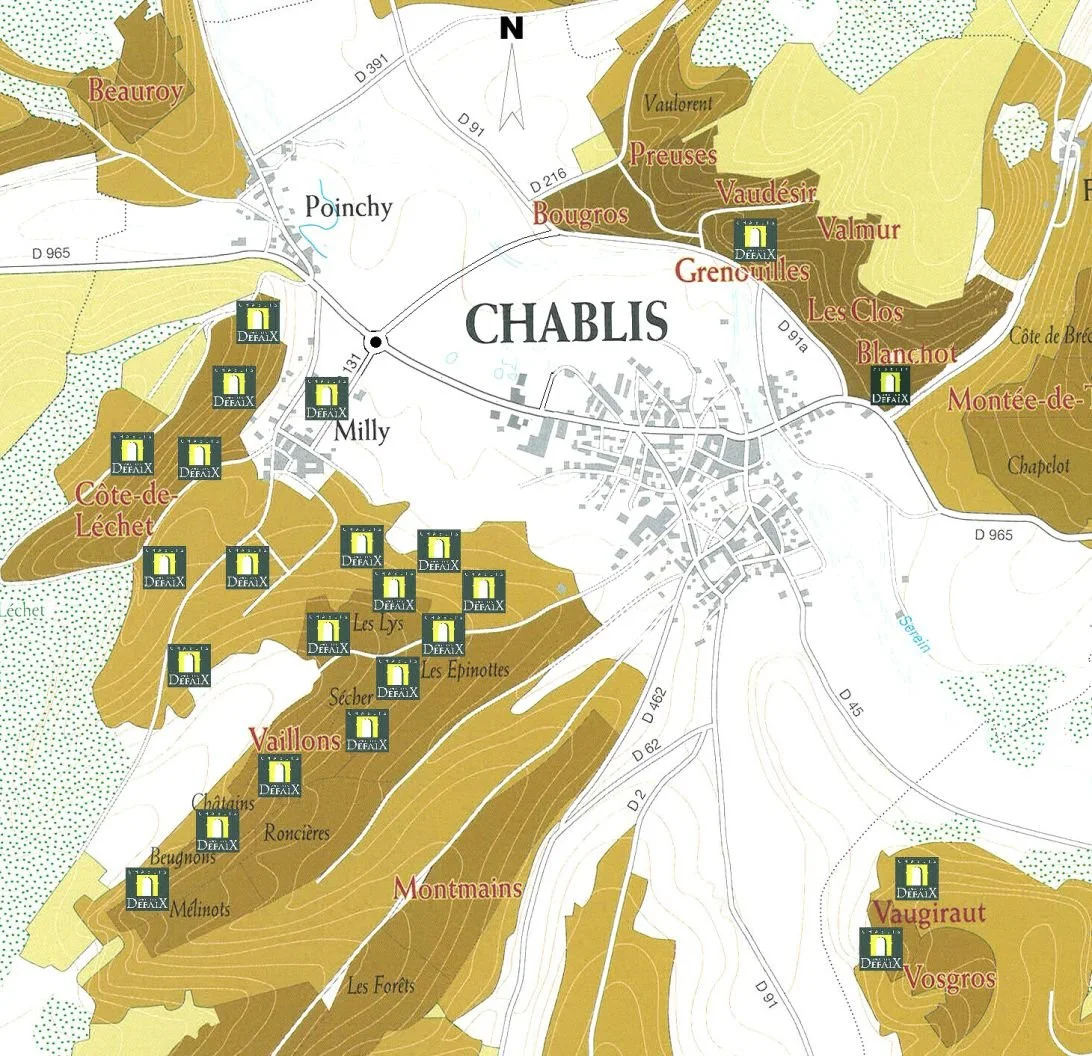
The family estate is located on the most ancients terroirs from Chablis, where monks on Pontigny made a selection one thousand years ago to create the Chablis Appelation.
Daniel-Etienne DEFAIX perpetuates the secular and familial tradition on these great monastic appellations. The works at the vines remains traditional because a clean and healthy vineyard gives a good quality of grapes and so of wines.The domain is 28 hectares, planted with Chardonnay on a typical soil called "kimmeridgien" (Jurassique supérieur, a marne argilo-calcaire with a lot of oysters fossilized inside).
The privileged exposition of the monks of Pontigny was still hill with high slope exposed south-East. A benefit for Chablis, scared by the freezes of the spring, that takes the first sunshines and also avoid crop losses.
Daniel-Etienne Defaix produces in the pure respect of the family tradition :
- 2 cuvées Chablis : Vieilles et Très Vieilles Vignes.
- 3 Chablis Premier Cru : Les Lys, Vaillon et Côte de Léchet.
- 2 Chablis Grand Cru : Blanchot et Grenouilles.
- 1 Bourgogne Rouge.(chablisdefaix.com)
The Wine List
2023 Domaine Mosnier Petit Chablis
A fresh, balanced and bright Petit Chablis showing aromas of sliced apples, warm herbs and a touch of stones. It’s medium-bodied with crisp acidity. Succulent and playful. Drink now.
90 points - James suckling, jamessuckling.com
2023 Sébastien Dampt Petit Chablis
A fine and lovely Petit Chablis to enjoy. An appealingly fresh nose features notes of green fruit, iodine, petrol and plenty of citrus nuances that are also reflected by the generous and supple yet punchy middle weight flavors that conclude in refreshing bitter lemon-inflected finish. Drink: 2025+.
Allen Meadows, Burghound.com
2023 Domaine Mosnier Chablis
A textured, balanced and vivid Chablis with aromas of apples, fresh lemons and some linden. Medium-bodied with bright acidity. Precise and lively, with a succulent expression in the mouthwatering finish. Drink or hold.
91 points - James suckling, jamessuckling.com
2023 Sébastien Dampt Chablis
Cool and pretty aromas combine notes of Granny Smith, petrol, just sliced citrus and a touch of seaweed character. The rich and agreeably textured, even succulent, medium-bodied flavors possess fine mid-palate density while exhibiting acceptable depth and persistence on the very supple finish. This easy-going effort should drink well shortly after release.
Allen Meadows, Burghound.com
First Course
2023 Domaine Mosnier Chablis 1er Cru Cote de Lechet
From one of Chablis’ finest Premier Cru sites, this elegant Chardonnay balances crisp citrus and green apple with delicate floral notes and a flinty minerality. Aged on fine lees for added depth, it finishes long and refined. Sylvain Mosnier is known for crafting precise, terroir-driven Chablis that showcases the region’s purest expression.
Winemaker notes
2023 Sébastien Dampt Chablis 1er cru Côte de Léchet
Beautifully finely etched with great fruit, acidity and delineation.
17/20 points - Jancis Robinson, jancisrobinson.com [Tasted Jan 2025]
2010 Daniel-Etienne Defaix Chablis 1er Cru Cotes de Lechet
Yellow-gold center with silver reflections at the rim. The aromatics show a wide array of salted lemon peel, bosc pear, wet mineral, white tea leaves and blanched almond. The backdrop has jasmine flower, crushed oyster shell and sliced button mushroom and an attractive leesy character. Palate is persistent and racy with distinctive mineral tones leading the charge. The wine has a voluminous mouthfeel alongside bracing acidity that pushes the mineral components on the finish. Just delicious and classic! Drink now–2030.
Wine Access, WineAccess.com
Second Course
2023 Sébastien Dampt Chablis 1er cru Vaillons
All comes from Beugnons, planted in 1959 and 1962. Possibly the palest but clearly the most concentrated in bouquet. Very disciplined though still with the generosity of the vintage, a suggestion of honeysuckle but only at the fringe. Fine energy at the finish. Drink from 2026-2030. Tasted Jun 2024.
92 points - Jasper Morris, Inside Burgundy
2023 Domaine Mosnier Chablis 1er Cru Beauroy
A solid, precise, vivid and succulent chardonnay with aromas of sliced apples, white peaches, warm spices and some wild herbs. Medium-bodied with fresh acidity. A juicy center palate with plenty of drive and focus. Flavorful and seductive. Drink or hold.
93 points, James suckling, jamessuckling.com
2011 Daniel-Etienne Defaix Chablis 1er Cru Vaillon
Pale yellow-gold, with streaks of platinum at the rim. Aromas of preserved lemon peel, white nectarine, salted lime, river rocks, and sea mist, with white flowers, chalky earth, wet stones, and a kiss of honeysuckle on the periphery. Clean and vibrant on the palate, with a persistent hint of salted lemon peel. Beautifully aged Chablis of perfect provenance. Drink now–2030.
Wine Access, WineAccess.com
Third Course
2023 Sébastien Dampt Chablis 1er cru Beugnons
Racy and cool and fresh. Bite on the end and a bit of liquorice.
17/20 points - Jancis Robinson, jancisrobinson.com
2022 Domaine Mosnier '1893 Heritage' Vielle Vignes Chablis
Crafted from old vines planted on Chablis’ renowned limestone soils, this limited-edition cuvée showcases the purity and finesse of the region. The 2022 vintage offers vibrant citrus and ripe orchard fruit, layered with subtle floral and mineral notes. Aged on fine lees, it delivers a beautifully rounded texture while retaining the crisp acidity that defines classic Chablis.
Winemaker notes
2021 Domaine Mosnier 'L'Elixer' Chablis 1er Cru Cote de Lechet
An extra lift and freshness of aroma. Here is volume and plenty of concentration despite the fine energy. Silky with a few mm of cushioning then broad and fine finishing – just a little roundness to these finishing flavours.
Tasting Notes, burgundy-report.com